Search
Featured Programs


 News


 08/10/2026 15:44
 Editor:
Tomasz Koper


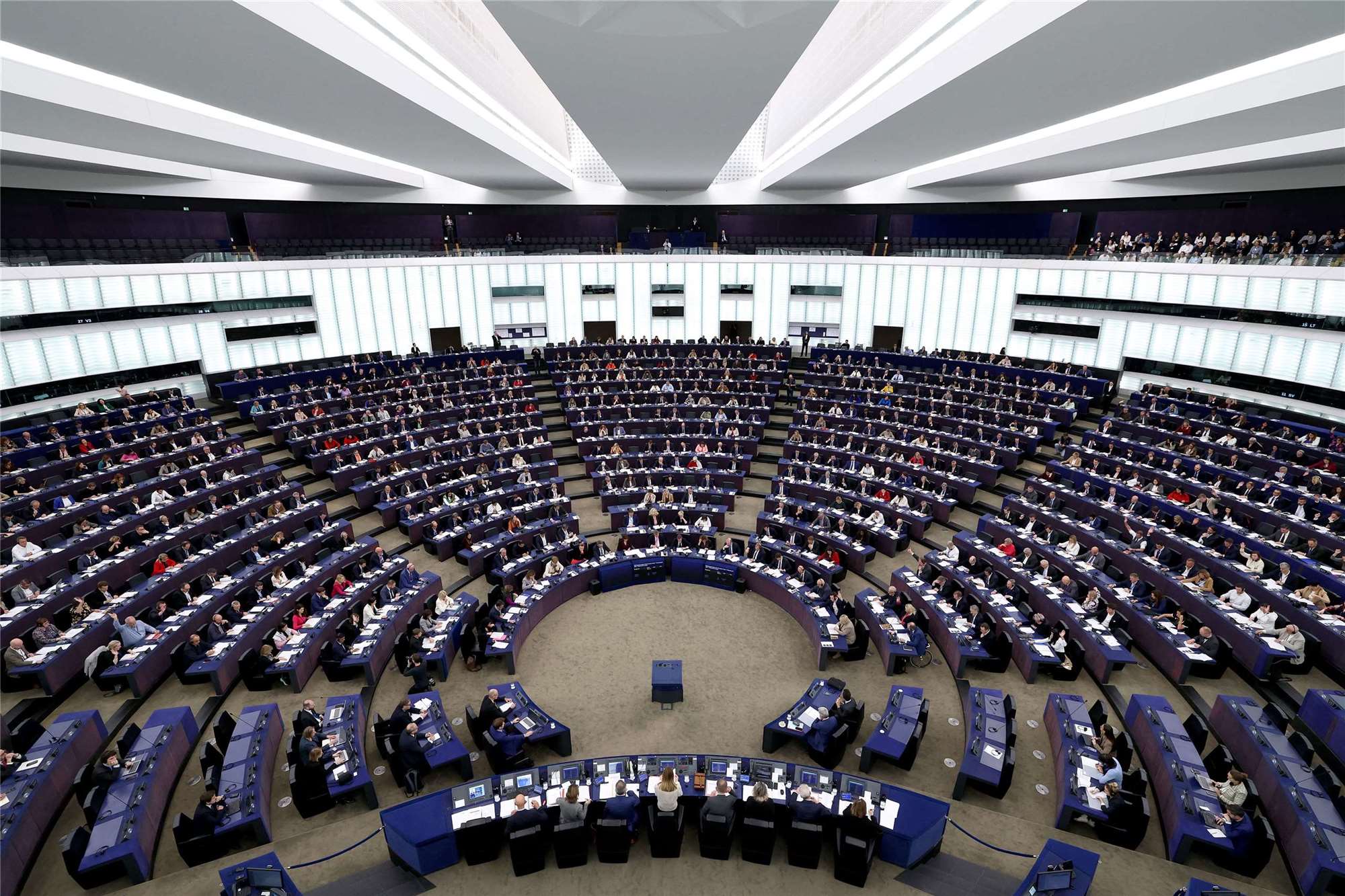
The European Parliament adopted a recommendation on EU-China political relations on Wednesday, October 7. The document rejects China’s attempts to pressure international organizations into restricting Taiwan’s international participation and exchanges. It also emphasizes that the bloc’s “one China policy” serves as the framework for its Taiwan diplomacy, and that the EU has never endorsed the “one China principle.”
The European Parliament made the recommendation to the European Council, the European Commission, and the EU High Representative for Foreign Affairs and Security Policy. The document states that the EU’s interest is in reinforcing a multilateral world, highlights the need to engage in dialogue with China, but rejects unfair economic practices and China’s position on Russia’s invasion of Ukraine. MEPs also call for stronger resilience against cyberattacks, foreign interference, espionage, and hybrid threats, as well as reinforced human rights dialogue and pressure on China over repression, forced labor, and policies in Tibet and Xinjiang. The recommendation passed with 454 votes in favor, 86 against, and 110 abstentions.
The text reiterates that the EU’s “one China policy,” which acknowledges China’s claim to Taiwan but does not endorse it, is a framework for its Taiwan policy and decision-making. It adds that the bloc has never endorsed the “one China principle,” which asserts Taiwan is a part of China and should become part of the PRC. The document states that the EU opposes any provocation or unilateral attempt to undermine the status quo through force, coercion, or in violation of the Taiwanese people’s will.
MEPs recommend further development of EU-Taiwan relations in multiple fields and encourage cross-strait dialogue and constructive engagement. The document opposes China’s distortion of UN General Assembly Resolution 2758 to support its claim over Taiwan, as well as Beijing’s transnational repression and the exterritorial application of Chinese law.
Recommendations also include deepening economic and technological cooperation with Taiwan in semiconductors and cybersecurity, bolstering exchanges between the EU, Japan, South Korea, and Taiwan on disinformation, early warning, and information sharing, and enhancing coordination with like-minded partners to boost resilience against hybrid threats.





 /