Search
Featured Programs


 News


 14/10/2025 16:15
 Editor:
Joey Chou


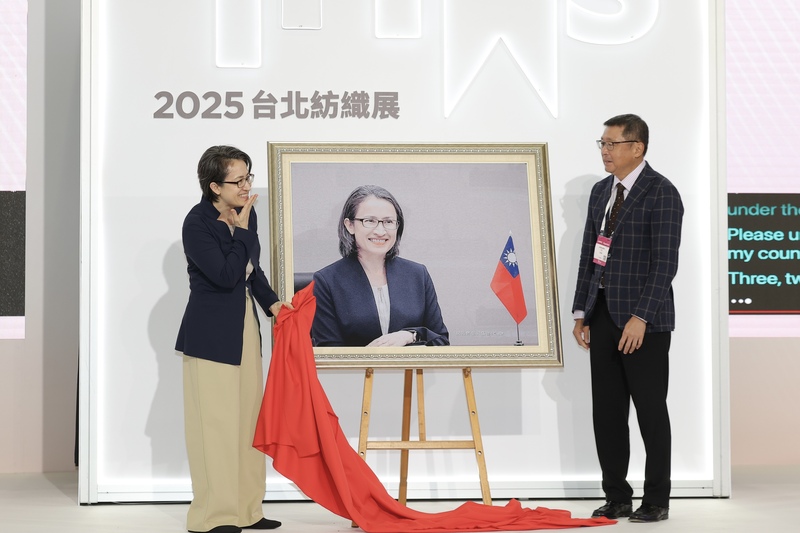
The Taiwan Textile Federation (TTF) said the textile industry is facing multiple headwinds, including U.S. tariffs, the appreciation of the New Taiwan dollar, the ongoing war in Ukraine, and new challenges from the European Union’s Digital Product Passport (DPP) system. The federation urged the government to offer more care and support to the textile sector.
The 2025 Taipei Innovative Textile Application Show (TITAS) opened Tuesday, with Vice President Hsiao Bi-khim (蕭美琴) acknowledging pressures from China’s overcapacity, low-price dumping, and U.S. tariffs. She said the government understands the industry’s difficulties and is actively engaging with Washington to secure “a more reasonable and competitive solution for Taiwan.”
Hsiao added that the government “will not let the industry fight alone,” noting that various programs have been launched to help firms innovate, transform, and expand into new markets to strengthen global competitiveness.
TTF Chairperson James Kuo (郭紹儀) said the sector faces a combination of geopolitical and regulatory challenges, including U.S. tariffs and currency shifts in addition to global conflicts. He said the EU’s DPP initiative, which requires each product to disclose material sources, production data, and carbon footprint, poses both a challenge and a chance for transformation.
“Factors affecting the economy next year will continue to influence the operation and development of the textile industry. Taiwan’s textile sector has long provided innovative and sustainable solutions to high-end markets in Europe and the United States. At this moment, we hope the government can continue to show care and give support to our hardworking and resilient industry, so that we can achieve stable and sustained growth on our existing foundation,” Kuo said.
This year’s TITAS hosts 388 exhibitors from 10 countries across 904 booths, featuring innovations in sustainability, functional applications, and smart technologies.






 /
 Experts say China spying case ‘tip of iceberg’ of Beijing’s transnational repression