Search
Featured Programs


 News


 01/07/2026 16:15
 Editor:
Tomasz Koper


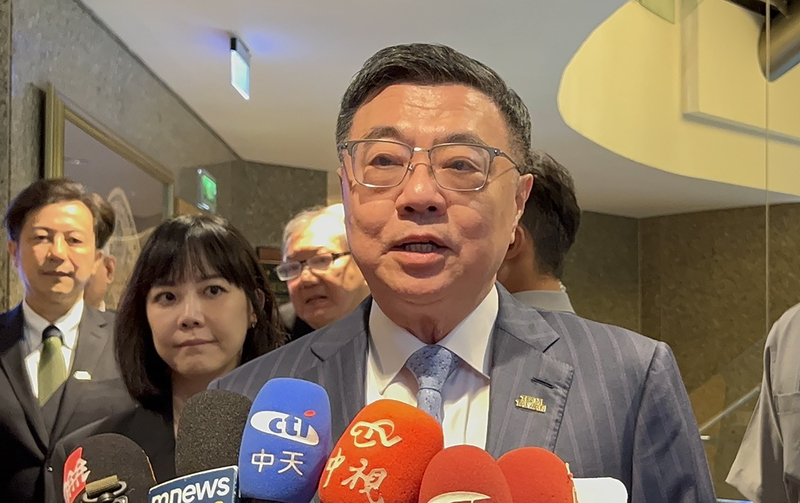
Premier Cho Jung-tai (卓榮泰) says China’s new ethnic unity law, going into effect on July 1, attempts to bring Taiwan’s 23 million people under the jurisdiction of the Chinese Communist Party (CCP), effectively codifying China’s unification policy into law. He added that its provisions amount to transnational repression. That came on Wednesday, July 1, at an event organized by the Economic Daily News.
China’s Law on Promoting Ethnic Unity and Progress was signed in March this year and goes into effect on July 1. It has been criticized by academics, governments, the United Nations High Commissioner for Human Rights, and activists outside China for suppression of ethnic minority identities and replacing them with a singular Han-centric Chinese identity. Critics say that the act's broad wording may allow Beijing to pressure people, groups, and businesses even outside China.
Cho said that the CCP is using the new law to expand its jurisdictional reach. Anyone deemed to be spreading speech deemed damaging to the law’s defined concept of ethnic unity, whether inside or outside China, could face arrest, warrants, or prosecution. Cho said this amounts to transnational repression.
Cho urged domestic political parties to condemn the law and said the government has the responsibility to protect the Taiwanese people. It must also make clear to citizens that the purpose of this law is to codify China’s unification policy, requiring people to accept CCP’s political framework. Cho added that the ultimate goal is annexing Taiwan and eliminating the Republic of China.
Speaking at a separate event on Wednesday, Mainland Affairs Council Deputy Minister Liang Wen-chieh (梁文傑) said China’s new law is riddled with vague and subjective legal concepts, giving the CCP yet another tool of political threats and intimidation. He said the attempt to extend China’s jurisdiction outside its borders will create a chilling effect, pressuring people into self-censorship.
Liang said that the CCP has long used various laws to pressure and detain Taiwanese people, as evidenced by the cases of pro-democracy activist Lee Ming-che (李明哲) and publisher Li Yanhe (李延賀), better known as Fucha (富察). Both were imprisoned in China on national security grounds despite being Taiwanese citizens. Liang added that the risks for Taiwanese people traveling to China are already at their highest, and the new law gives the CCP yet another legal weapon at its disposal.






 /
 Experts say China spying case ‘tip of iceberg’ of Beijing’s transnational repression