Search
Featured Programs


 News


 04/09/2026 18:18
 Editor:
Michelle Chiang


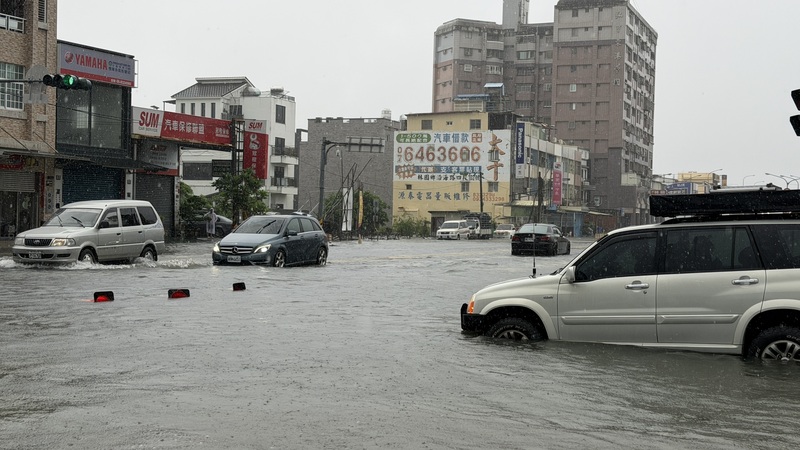
Week-long downpours in Taiwan have resulted in widespread flooding and road and transportation shutdowns across the entire country. The Central Weather Administration (CWA) has issued heavy rain warnings for Keelung City, Taipei City, New Taipei City, and Yilan County, and advises avoiding mountainous areas, rivers, streams, and low-lying areas during this time. The Transportation Ministry also recommends checking train availability and road conditions for changes before travel.
The Taiwan Railway Corporation (TRC) announced the closure of both the Shen'ao Line and Pingxi Line until at least 4 p.m. on Friday, September 4 . Additionally, due to signal malfunctions in Xishi and Pingtung, trains between Pingtung and Chaozhou will experience delays in both directions.
The New Taipei City Government also announced early on Friday that the Gongbei Bridge and Baofu Bridge in Xizhi District will be closed immediately due to rising Keelung River water levels. Furthermore, the Economic Ministry’s Water Resources Agency has reported that, due to heavy rains in mountainous areas and continuous heavy rainfall in the upper reaches of the Keelung River catchment area, the Yuanshanzi flood diversion facility has been activated.
The Keelung City government stated that its disaster response has been upgraded to Level 1 starting at noon on Friday, September 4. Heavy rain caused flooding in many parts of the city, including areas near the Dawulun Industrial Park, with knee-deep water even inundating shops and homes.
According to CWA records, the Tainan weather station recorded a cumulative rainfall of 1372.5 mm in August, the second-highest since records began in 1897, second only to the 1510.3 mm recorded in 1994. Flood prevention pumps have been in full operation, with the amount of water removed citywide so far at approximately 81 million metric tons, equivalent to the size of the Nanhua Reservoir.
The central government stated that it’s continuously monitoring weather, water levels, and disaster information. The public is urged to stay informed about the latest water and weather conditions, not to underestimate threats caused by heavy rains, and to prepare for disaster prevention and mitigation in advance.







 /