Search
Featured Programs


 News


 09/09/2026 17:36
 Editor:
Tomasz Koper


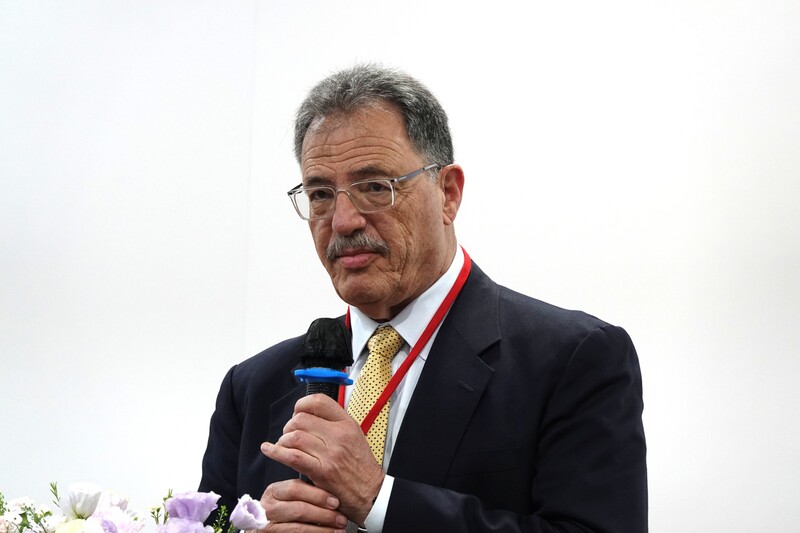
The Shih Ming-te Foundation hosted the International Symposium on Civil Society, Democratic Resilience, and National Security on Wednesday, September 9. Stanford University’s Hoover Institution Senior Fellow Professor Larry Diamond highlighted six factors driving and deepening a global “democratic recession” in his keynote address, but praised Taiwan for maintaining a remarkably robust and resilient democracy.
The Shih Ming-teh Foundation said that the infiltration and pressure exerted by authoritarian forces has grown increasingly complex, extending beyond Taiwan’s domestic governance to become a shared challenge for democracies worldwide. It noted that Taiwan, as both a practitioner of democracy and a nation on the front line of authoritarian pressure, has invaluable real-world experience. The symposium organized by the foundation brought together renowned international scholars and experts from various fields to examine the topic through the lenses of civil society, democratic resilience, and national security.
Diamond, an internationally renowned authority on comparative politics and democratic transition, delivered a keynote address at the event. He said that the phenomenon of “democratic recession” has been seen in the world since 2006, driven and deepened by six major factors: declining freedom and democracy, deteriorating rule of law, a wave of illiberalism and populism, social polarization exacerbated by social media, an authoritarian resurgence, and declining democratic quality in the United States and Europe.
Diamond’s analysis found that leaders showing authoritarian and populist characteristics typically share several traits. Those include being anti-elite, anti-institutional, highly personalized in their leadership style, prone to seeking out enemies, and inclined to reject checks and balances once elected.
Diamond gave high marks to Taiwan’s democracy in his speech. He cited Freedom House’s annual rankings and noted that the United States’ score on political rights and civil liberties has fallen from a peak of around 94 points in 2008 to 81 points today. Taiwan, by comparison, has maintained a remarkably robust and resilient democracy according to the data. Diamond argued that the independence of the Central Election Commission is one key factor allowing Taiwan’s democracy to maintain public trust, adding that the U.S. has much to learn from Taiwan in this regard.





 /
 Retired US Navy admiral says China's gray-zone strategy against Taiwan is 'hollow'