Search
Featured Programs


 News


 10/09/2026 16:57
 Editor:
Tomasz Koper


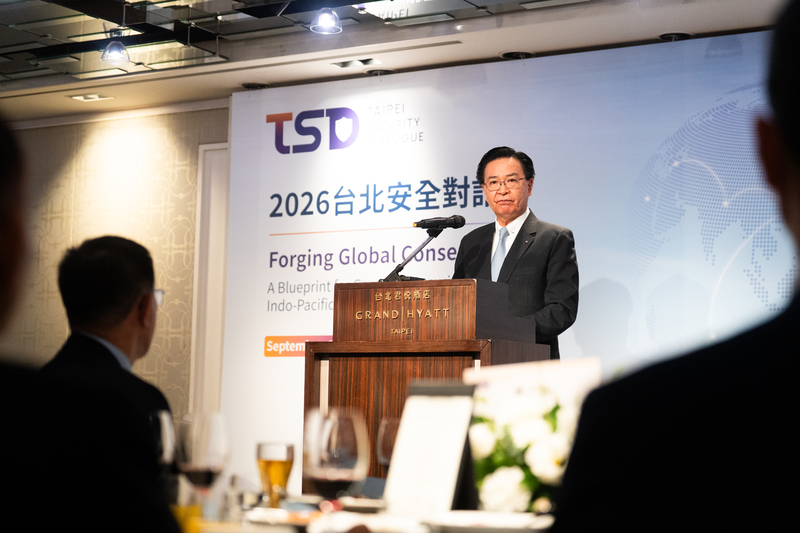
Taiwan will continue to strengthen its defense capabilities and cooperate with democratic partners, and while the country is concerned about the possibility of conflict, surrender has never been an option. That statement came from National Security Council Secretary-General Joseph Wu (吳釗燮), speaking at the 2026 Taipei Security Dialogue dinner on Wednesday, September 9.
In his speech at the evening event, Wu said that several important changes have occurred in the security threats facing Taiwan since 2016. First, China has rapidly expanded its military power. Chinese military aircraft, naval vessels, and coast guard ships have routinely crossed the Taiwan Strait median line since 2022. Beijing continues to pressure Taiwan through so-called “joint combat readiness patrols” and large-scale military exercises.
Second, China continues to use coast guard ships, as well as research and other vessels, to carry out gray-zone coercion. Wu noted that in June, Chinese coast guard and maritime patrol ships conducted so-called “maritime law enforcement” operations within Taiwan’s exclusive economic zone off its eastern coast. China also used unlawful maritime claims to advance its expansionist goals.
Wu pointed out that China has weaponized the “One China principle,” using it to obstruct Taiwan’s participation in international forums and impede visits by senior Taiwanese officials to diplomatic allies. Beijing also used it as the basis for “law enforcement” in Taiwan’s exclusive economic zone and for launching military exercises. This shows that “One China” has become part of Beijing’s lawfare and military coercion.
Wu stressed that Taiwan is not Beijing’s only target. In recent years, the entire first island chain has become the front line of China’s expansionism, while Taiwan remains the focal point of China’s escalating coercive actions.
In response to those threats, Taiwan has continued to increase defense investment, push for military reform, and enhance self-defense capabilities. The country has also continued to advance whole-of-society defense resilience.
Wu called on democracies to work together to strengthen collective deterrence. He said the international community must show its shared resolve to defend regional peace and stability and make clear that there are rules, boundaries, and consequences to bear.





 /
 Experts say China spying case ‘tip of iceberg’ of Beijing’s transnational repression