Search
Featured Programs


 News


 11/09/2026 13:35
 Editor:
Tomasz Koper


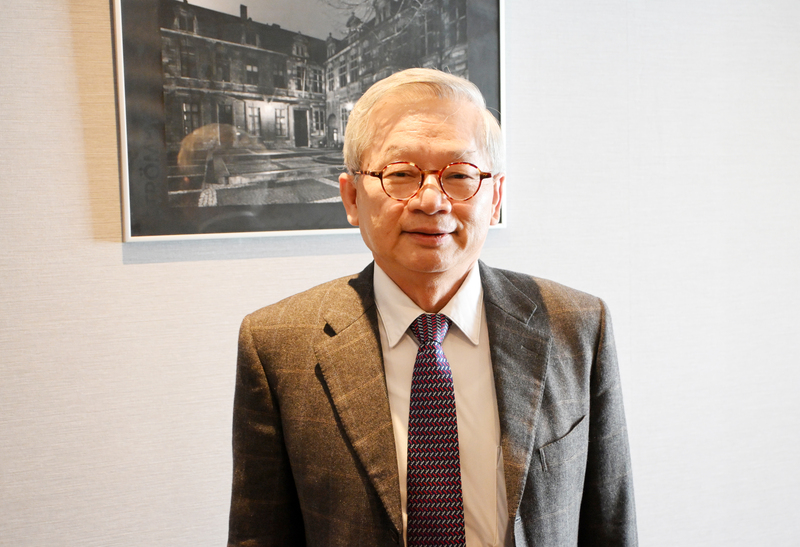
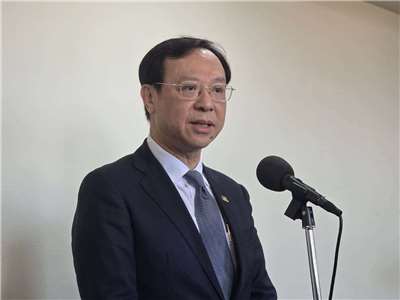
Geopolitical conflicts and the COVID-19 pandemic showed that global supply chains can be disrupted without warning, so for the sake of national security and economic development, democracies must make them secure and resilient. Scientific and technological fields across the world require AI, so they must rely on Taiwanese semiconductors. Those statements came from National Science and Technology Council (NSTC) Minister Wu Cheng-wen (吳誠文) in an interview with the Central News Agency published on Thursday, September 10.
Wu recently attended the 2026 Taiwan-Europe Chip Innovation Forum in Antwerp, Belgium, held on September 9 and 10.
Wu noted that over the past 50 years, Taiwan kept investing in semiconductor education, R&D, and industrial development, which allowed it to master advanced process manufacturing and strengthen capabilities across an ecosystem encompassing mature processes, chip design, and advanced packaging. By contrast, European Union countries have gradually lost their edge in semiconductor manufacturing and developed a sense of crisis. The United States has also progressively scaled back investment over the past two to three decades, making it difficult to regain its former advantage. This makes cross-border cooperation essential.
Wu said that the importance of semiconductors lies in their role supporting AI and quantum computing, as well as the future intelligent robotics industry. He predicted that future service robots will rely heavily on AI, and that without close support from Taiwan’s semiconductor and AI hardware industries, countries around the world would face disruptions in the supply chains underpinning innovation.
Wu noted that Taiwan’s semiconductors will also play an important role in even more forward-looking space industries. This extends beyond traditional services like communications, remote sensing, and weather. National security and global communications increasingly depend on the development of next-generation low Earth orbit (LEO) communication satellites, with future applications potentially extending even to lunar and deep space exploration.
Wu concluded that regardless of the scientific or technological field involved, AI support is necessary, and that demand has made it so that the world must rely on Taiwan’s semiconductors.


 /
 Experts say China spying case ‘tip of iceberg’ of Beijing’s transnational repression