Search
Featured Programs


 News


 15/09/2026 14:46
 Editor:
Tristan Hilderbrand


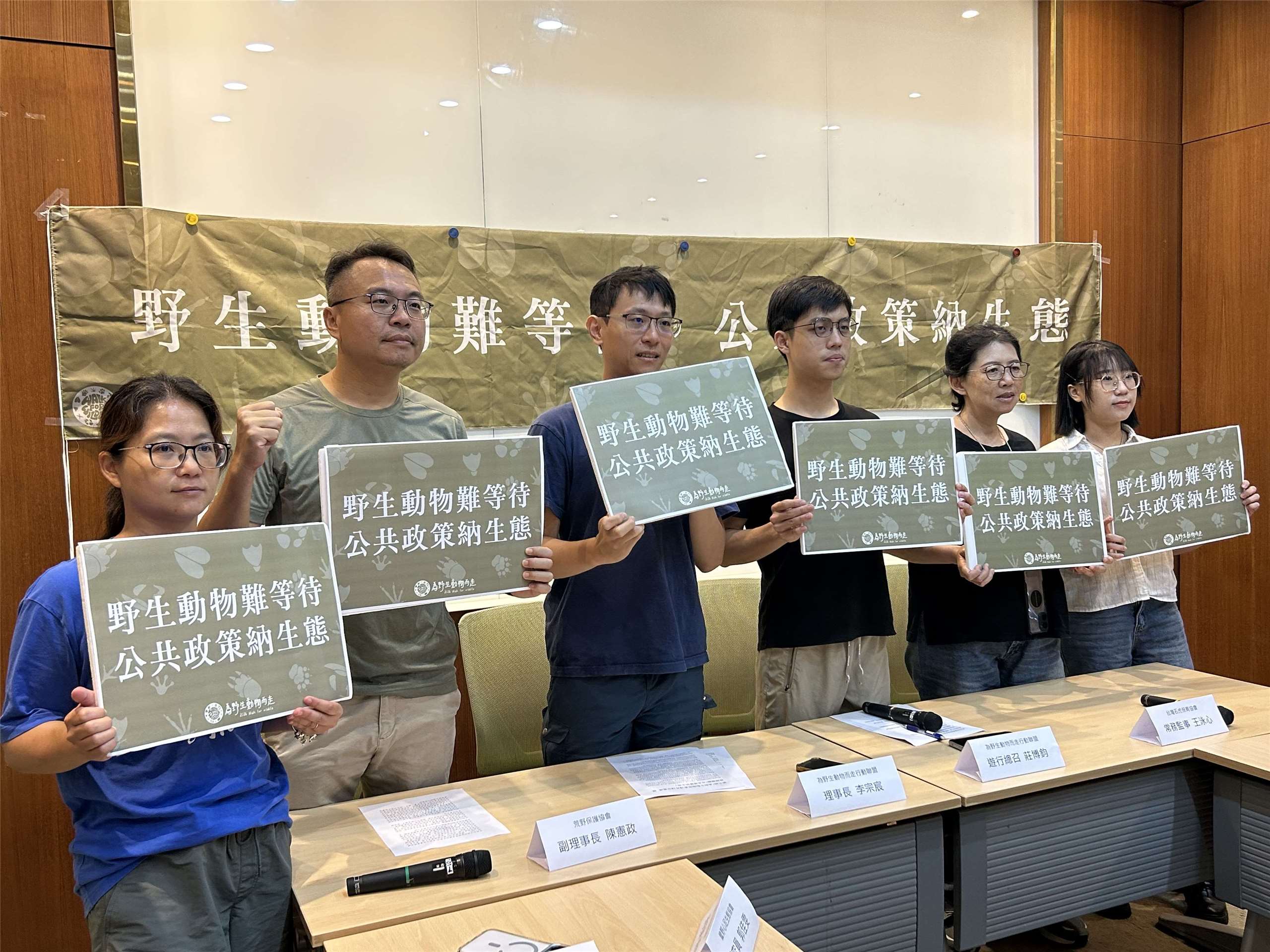
The third Walk for Wildlife will kick off this Saturday, September 19 in Taipei. Ecological conservation NGOs underscore the importance of weighing ecological risks when designing and implementing policies and of holding people responsible for resulting ecological consequences.
The Leopard Cat Association of Taiwan, Wild at Heart Legal Defense Association, and the Society of Wilderness announced at a press conference this Tuesday, September 15, that the third Walk for Wildlife next to the Legislature will put forward four demands: supplementing the legal framework for roaming animal management, establishing a scientific assessment system centered on actual conflicts, improving the system for sheltering, relocating, and protecting animal welfare, and establishing a responsible biodiversity governance mechanism.
Walk for Wildlife Chair Lee Tsung-chen (李宗宸) cited a recent study by the National Pingtung University of Science and Technology that found that 6 of 10 juvenile pangolins tracked in southern Taiwan since 2022 have died from dog attacks. Lee said this indicates a failure in stray animal management policies, leading to the deaths of endangered wildlife.
Lee said the problem is not a lack of a single measure but rather the independent operation of different policies. When ecological impacts lack a systemic framework for decision-making and checks and balances, he said, conservation agencies often only attempt rescue, monitoring, and remediation after habitat damage, wildlife deaths, or conflicts have occurred.
“Both the central and local governments should establish what we call ‘biodiversity committees.’ Anything that might impact the ecosystem needs to be reviewed. Scientific data and professional opinions should be considered before public policy is implemented. As mentioned earlier, whether it’s leopard cats, white dolphins, or Zhiben Wetlands, there is already sufficient data, and not incorporating it into the decision-making process leads to controversies,” Lee said.







 /