Search
Featured Programs


 News


 22/09/2026 16:54
 Editor:
Hanna Bilinski


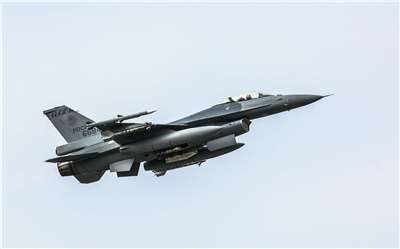
United States President Donald Trump and Chinese President Xi Jinping (習近平) are scheduled to hold the second Trump-Xi summit of the year in Washington this Thursday. They are expected to focus on issues including Taiwan, arms sales, tariffs, artificial intelligence, and U.S.-China economic and trade relations. Of particular interest is a potential US$14 billion arms sale to Taiwan, the announcement of which could be further delayed due to the summit or even become a bargaining chip in negotiations.
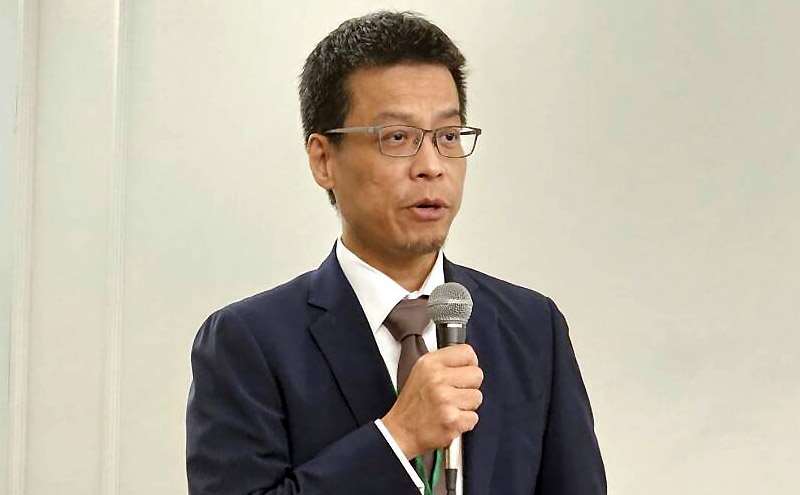
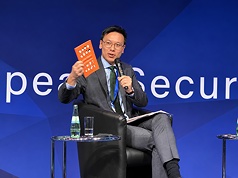
National Security Council adviser Alex Huang (黃重諺) said in an interview Tuesday that many areas of Taiwan-U.S. cooperation have not only continued but have increased in scale. Per his assessment, it is unlikely that Washington would decline to approve the relevant arms sales to Taiwan following the leaders’ summit.
“Taiwan, or the first island chain, is a key security concern for the United States based on the U.S. National Security Strategy and National Defense Strategy. I think it is reasonable to feel wary, but there is no need for excessive concern. Similarly, I do not think there is any need to worry excessively about whether the United States would treat Taiwan as a sort of bargaining chip for an exchange,” he said.
Huang noted that the U.S. State Secretary Marco Rubio and foreign ministers of Japan and South Korea recently issued a joint statement addressing peace and stability across the Taiwan Strait, supply chain resilience, opposition to economic coercion, and responses to overcapacity. This, he said, could be viewed as establishing a basic position on the overall situation ahead of the summit.
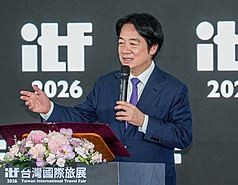
As for Taiwan-U.S. relations, Huang said cooperation continues to advance in areas ranging from high-tech supply chain development and security cooperation to state-level exchanges. He said this work began taking shape gradually during former President Tsai Ing-wen’s (蔡英文) administration and has been further implemented since President Lai Ching-te (賴清德) took office.
Huang analyzed that preparations for the CCP’s 21st National Congress next year, including arrangements concerning Xi’s continued tenure, are among Xi’s main priorities moving forward. He said Xi needs a relatively stable external environment as China is currently facing domestic and external challenges, and the summit could be one element in creating favorable conditions.

 /