

 /
 Taiwan says communication with US remains open ahead of Trump-Xi talks
Search
Featured Programs


 News


 25/09/2026 09:19
 Editor:
Joey Chou


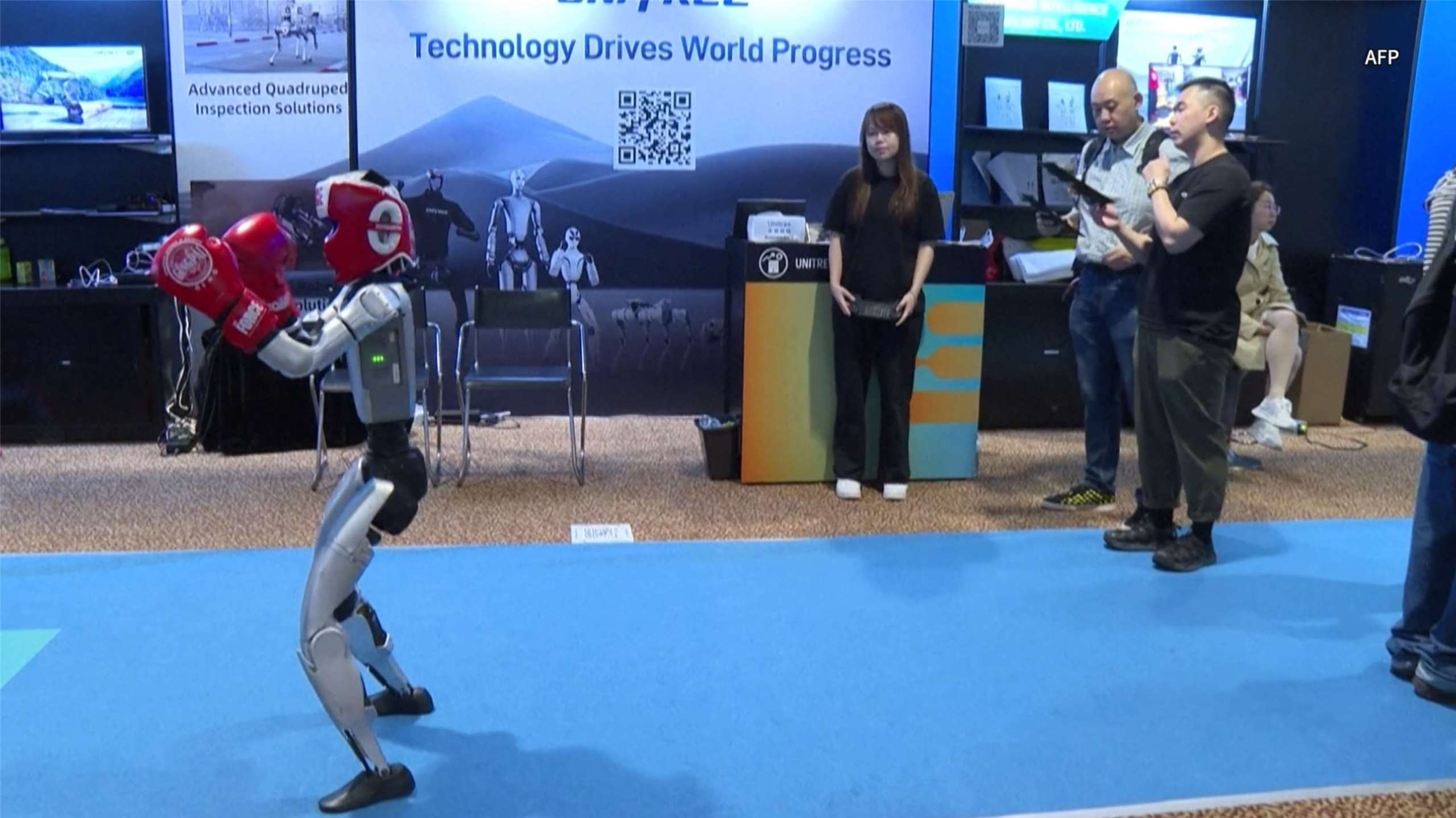
China is pouring resources into artificial intelligence while its domestic economy struggles to create jobs and sustain consumer spending.
Beijing has backed the industry through public funds, subsidies, procurement, and data-center construction. Bloomberg reported in June that officials were preparing a five-year plan worth about 295 billion U.S. dollars for a nationwide AI computing network. That proposal has not been announced as a finalized budget.
The scale of that ambition contrasts with weak demand at home. Official data show unemployment among urban 16- to 24-year-olds, excluding students, reached 18.9 percent in August. Domestic car sales fell about 20 percent in the first half of this year.
Even economists with ties to Chinese institutions are questioning whether a technology boom can lift the broader economy. Tsinghua University economist Li Daokui (李稻葵) says high-tech growth alone cannot support China’s vast consumer market.
People’s Bank of China adviser Huang Yiping (黃益平) warned this month that AI could deepen an existing imbalance, where factories produce more, while households buy very little. He called for policies that strengthen consumption.
Economist Xu Chenggang (許成鋼) raises another concern. He argues that money directed toward AI may come at the expense of jobs and household demand, while automation could reduce the need for workers.
Chinese netizens on the internet have called the investment drive an “AI Great Leap Forward,” invoking Mao-era campaigns to question whether resources are being misallocated.
Beijing’s policies aim to modernize industry through AI. The test is whether that technological progress translates into employment, incomes, and stronger spending.