Search
Featured Programs


 News


 30/09/2026 15:22
 Editor:
Tomasz Koper


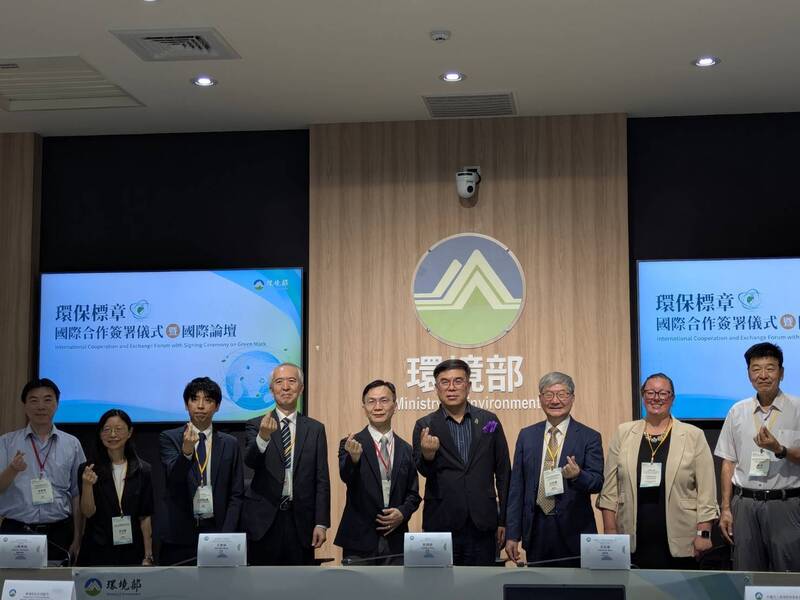
The Environment Ministry signed a mutual recognition agreement (MRA) for ecolabels with the Japan Environment Association (JEA), as well as a memorandum of understanding (MOU) with the U.S.-based Global Electronics Council (GEC) on its EPEAT ecolabel. Both agreements were signed on Wednesday, September 30, and accompanied by an international forum on ecolabels.
The binding agreement with JEA will allow certain items to be tested and verified in one country, with the results accepted in both. This may substantially reduce cross-border verification costs and time. In its first phase, the scheme will target imaging equipment such as printers and scanners, alongside IT products like personal computers, laptops, and monitors. These categories make up a major share of Taiwan’s electronics exports.
The ministry also signed an MOU with GEC regarding the Electronic Product Environmental Assessment Tool (EPEAT) ecolabel. This program aims to provide a standard for measuring the environmental impact of electronic products for the purposes of government and corporate procurement. The cooperation will help Taiwan’s ICT supply chain stay current with the latest international carbon footprint and sustainability standards, obtain EPEAT certification, and better compete for global procurement contracts.
To streamline administrative processes, the Environment Ministry has designated the Environment and Development Foundation as the point of contact for partners. Businesses will no longer have to handle complex cross-border communication or repeated testing submissions in different locations on their own. The foundation will offer technical consultations to companies and allow them a direct path to international markets despite applying domestically.
Environment Minister Peng Chi-ming (彭啓明) said in his remarks at the signing ceremony that last year, private-sector green procurement spending in Taiwan broke NT$100 billion (US$1.14 billion) for the first time. He noted that leading tech companies like TSMC directed as much as 80 percent of their procurement spending toward IT equipment with ecolabels and EPEAT certification. This shows strong demand within Taiwan’s industry for internationally certified green products.
Peng stated that the agreements are an important milestone in Taiwan’s green certification efforts. The country is moving from international exchanges and information sharing towards regulatory alignment and market integration. He added that the goal is to transform past green trade barriers into a green passport, which will bolster Taiwanese businesses’ international competitiveness.





 /
 Experts say China spying case ‘tip of iceberg’ of Beijing’s transnational repression