Search
Featured Programs


 News


 05/10/2026 23:41
 Editor:
James Thompson


The arrest of a woman in California suspected of spying on the son of Taiwan’s president is part of a much broader pattern of Beijing-directed surveillance and transnational repression, experts have said. Two Taiwanese scholars told Rti in separate interviews on Monday, October 5, that the case represents only the “tip of the iceberg” of Chinese operations overseas, while another said it should serve as a “wake-up call.”
The FBI arrested 34-year-old real estate agent Heather Zhang at Los Angeles International Airport on Sunday, accusing her of acting as an unregistered foreign agent. Zhang allegedly traveled to Seattle in September 2025 where she surveilled President Lai Ching-te’s (賴清德) son and his family, photographing and filming them and collecting information including vehicle license plates.
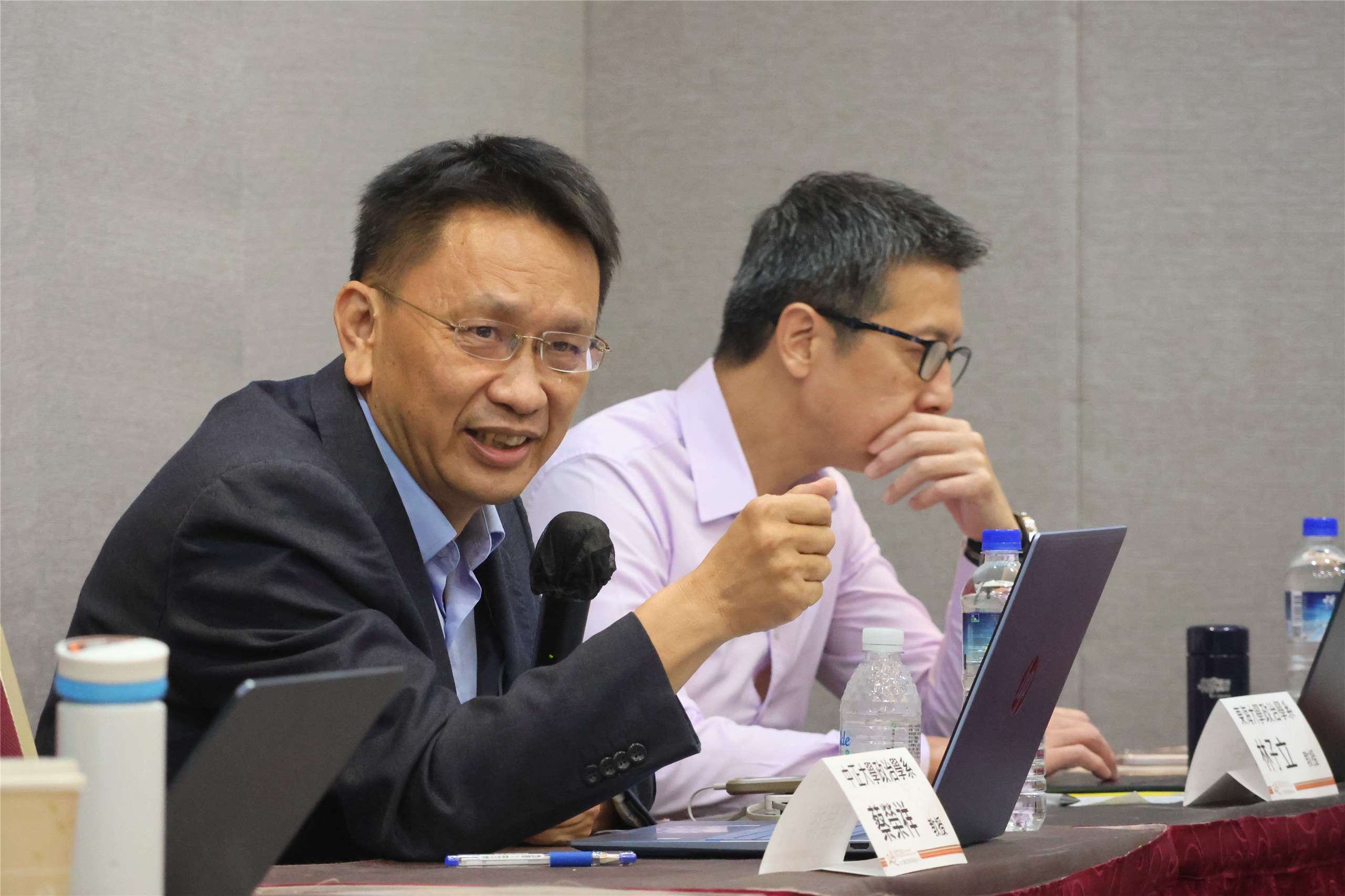
“This case is highly sensitive and serves as a wake-up call at both the political and national security levels,” National Chung Cheng University Department of Political Science professor Joseph Tsai (蔡榮祥) told Rti in an interview.
China’s transnational repression has typically targeted Hong Kongers, Uyghurs, Tibetans, and pro-democracy activists, so surveilling the immediate family member of a sitting head of state represents a “distinct escalation in operational risk tolerance,” Tsai suggested.
He said Beijing has long relied on “non-traditional intelligence assets,” including people with ties to diaspora networks, to carry out “low-cost, covert local surveillance in exchange for financial benefits.”
In a separate interview with Rti, National Chung Hsing University Graduate Institute of International Politics professor Tan Wei-en (譚偉恩) similarly characterized Zhang as an “expendable asset” rather than someone deliberately cultivated by China’s national-security or military-intelligence system. He said her U.S. citizenship, legitimate occupation, and ability to live and travel freely in the United States would make her a preferred choice for this kind of intel-gathering operation.
“However, the risk is that this kind of outsourced personnel is usually not careful enough and lacks intelligence-security skills,” Tan told Rti. “From this, it can be inferred that the CCP may not care very much about intelligence concerning the Taiwanese president’s son, or may only be using Zhang to confirm whether genuine front-line intelligence personnel are providing Beijing with reliable information.”
Since Zhang was allegedly directed to conduct surveillance of a specific target, rather than randomly obtain information, her arrest does not guarantee the target’s safety, Tan suggested. “The Zhang case is only the tip of the iceberg,” he added.
Tunghai University Center for Mainland China and Regional Development Research Director Lin Tzu-li (林子立) also described the United States as “only the tip of the iceberg” of China’s transnational repression. Lin told Rti in a separate interview that China has long conducted surveillance and information-gathering operations around the world, with at least 126 people connected to Taiwan targeted in 140 instances of Chinese transnational repression to date.
All three scholars separately suggested Beijing’s motives in this case could include gathering information for future leverage while applying psychological pressure. Tan described such surveillance as a form of “indirect deterrence” while Tsai said such actions “exert a strong chilling effect.”
Lin said the case was unlikely to have a major impact on U.S.-China relations in the short term, a view broadly shared by Tsai. But the incident could deepen U.S. distrust of China over the medium to long term, Lin said.
Meanwhile, Tan suggested further cases could bring U.S.-China counterintelligence competition increasingly into the open and expand U.S.-Taiwan security cooperation from the military sphere into counterintelligence.


 /
 Listen