Search
Featured Programs


 News


 16/10/2026 19:46
 Editor:
Michelle Chiang


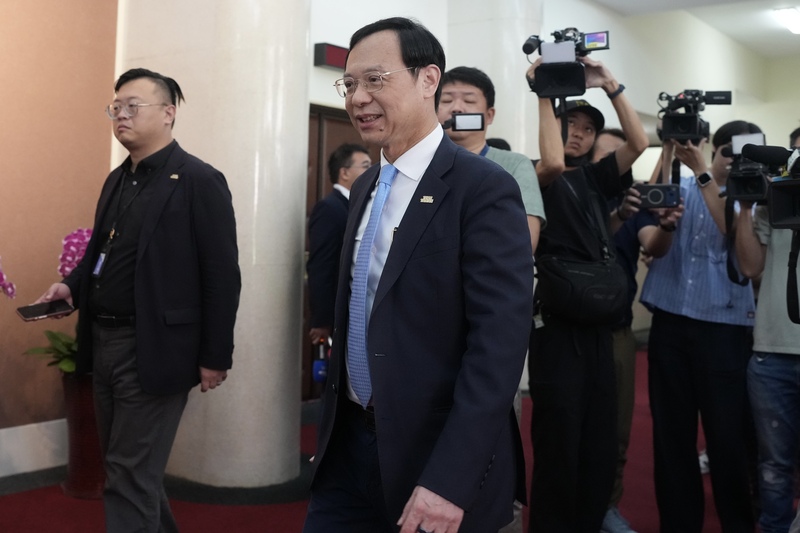
The Legislature passed its third reading of the TPP’s amendments to the Senior Citizens Welfare Act on Friday, October 16. Health Minister Shih Chung-liang (石崇良) spoke out, saying that the amendments, which differentiate based on age, fail to adequately consider the financial capacity of the elderly or their dependents, violating the fundamental principle of the National Health Insurance (NHI): that is, the principle of payment based on financial means.
Currently, the central government mainly provides NHI premium subsidies to low-income households and low-to-middle-income elderly individuals aged 70 and above, while local governments formulate different subsidy measures based on their own financial resources.
The newly passed amendments stipulate that for those aged 65 and older, or their legal caregivers, whose total income tax in the past year did not meet the reporting threshold or whose income tax rate was less than 20%, the central government will fully subsidize their NHI premiums. However, a large percentage of elderly individuals do not report income tax as they no longer work, so the amendment would cover well-off retirees as well as those unable to work.
Shih said that the NHI should be based on the principle of payment according to financial means, and expanding subsidies would impact intergenerational equity. He also detailed that the government has recently proposed increasing the national pension, Welfare Allowance for Elderly Farmers, and continues to promote a comprehensive survey of elderly people living alone, providing care visits, meal delivery services, and subsidies for emergency rescue devices. He emphasized that increasing health insurance premium coverage could have a crowding-out effect on social welfare – meaning that these other programs could receive less or eventually no funding in the future.
The Directorate-General of Budget, Accounting and Statistics estimates the related costs of the changes at approximately NT$38.8 billion (nearly US$1.2 billion). Shih pointed out that next year, the total NHI budget will exceed NT$1 trillion (approaching US$30.9 billion), with those aged 65 and above accounting for 20% of the total population, but over 42% of total NHI expenditure.
Furthermore, the long-term care budget has grown from less than NT$5 billion (over US$154 million) in 2015 to over NT$110 billion (almost US$3.4 billion) this year, an extremely large increase in financial pressure. Expanding NHI subsidies for the elderly may seem small, but its potential damage to the overall system is very worrying, Shih said. He emphasized that the government has always spared no effort in caring for the elderly, but that the people of Taiwan rely heavily on NHI and need a stable system to ensure its sustainable support.





 /