
 /
 Taiwan says communication with US remains open ahead of Trump-Xi talks
Search
Featured Programs


 News


 02/11/2026 17:14
 Editor:
Filip Leskovsky


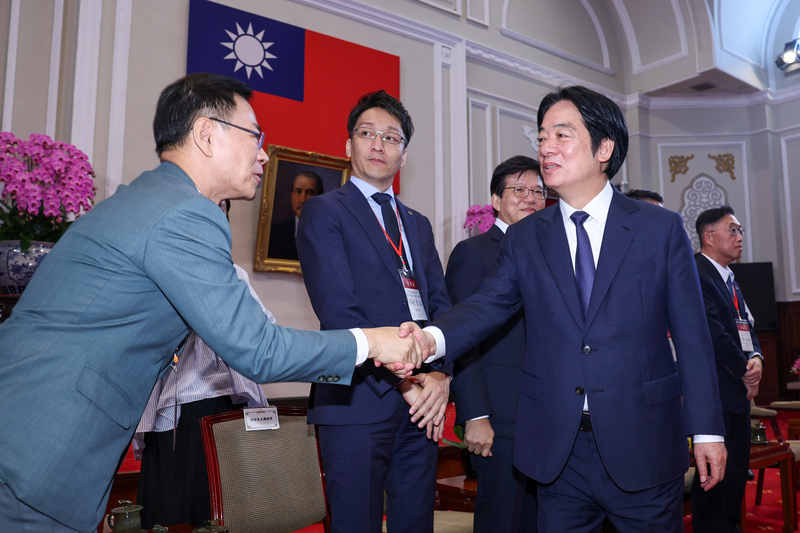
President Lai Ching-te (賴清德) said Monday, November 2, that Taiwan’s government is planning its own version of the European Union’s Carbon Border Adjustment Mechanism, or CBAM, and a carbon emissions trading system to help businesses meet international climate standards.
Speaking to representatives of companies that won the eighth National Enterprise Environmental Protection Awards, Lai said the government aims to turn the pressure of the 2050 net-zero transition into a source of competitiveness. The EU’s CBAM requires importers of certain carbon-intensive goods to account for the emissions embedded in those products, a policy designed to prevent carbon leakage.
Lai said: “With the carbon fee system now officially in place, we are carefully planning a Taiwan version of CBAM and a carbon emissions trading system. We hope to help industries connect with international standards and turn the pressure of transition into a driving force for competitiveness.”
Lai praised the award winners, saying their companies saved over 1.6 billion kilowatt-hours of electricity last year and increased renewable energy use by 131%. He cited Yamaha Motor Taiwan’s shift to reusable steel export packaging and its work with 85 suppliers, as well as E.SUN Bank and Chang Hwa Bank’s carbon-pricing and carbon-assessment programs for smaller businesses.
Other winners used artificial intelligence to cut energy use, including Far Eastern SOGO’s Tianmu store and Chi Mei Medical Center, while Ecotour Taiwan combined low-carbon travel with local development and conservation. Lai said the government’s National Climate Change Committee will continue supporting companies and helping Taiwan’s supply chains adopt greener practices. He urged businesses to share their experiences and make sustainability a lasting advantage for future generations.